
Einkorn Bread Recipe: 4 Common Mistakes to Avoid
What if the reason your homemade bread keeps turning out dense and gummy has nothing to do with your skill — and everything to do with your flour? Studies on ancient grain consumption show that interest in einkorn wheat has grown by over 40% in the last five years, yet most first-time bakers still treat it exactly like modern all-purpose flour. That’s where things go wrong.
This homemade einkorn bread recipe is perfect for beginners and experienced bakers alike. Made with ancient einkorn flour, simple pantry ingredients, and an easy step-by-step method, it produces a soft crumb, crisp crust, and rich nutty flavor without complicated techniques.
This Einkorn Bread Recipe guide is here to change that. Whether you’re drawn to einkorn for its rich nutritional profile, its deep nutty flavor, or its gentler gluten structure, this post gives you everything you need — a tested recipe, step-by-step instructions, and the four most common mistakes that are silently ruining home bakers’ loaves every day.
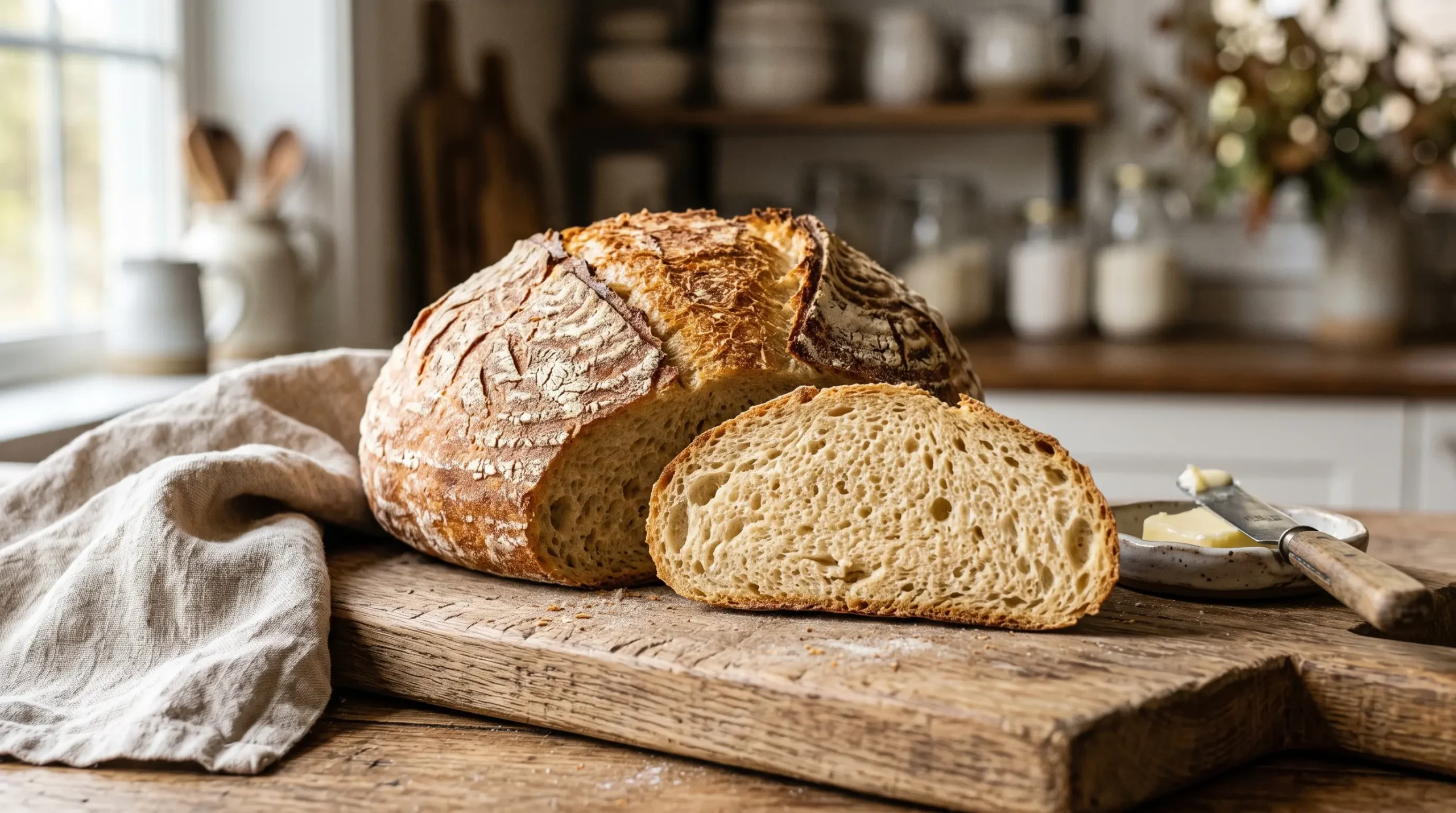
Einkorn Bread Recipe
Ingredients
Method
- Dissolve the yeast and honey in warm water and let stand for 5–10 minutes until foamy.
- Mix the einkorn flour and salt in a large bowl.
- Add the yeast mixture, olive oil, and apple cider vinegar. Stir until a soft dough forms.
- Knead gently for 4–5 minutes until smooth. Avoid over-kneading.
- Place the dough in a lightly oiled bowl, cover, and let rise for about 1 hour or until slightly doubled.
- Gently punch down the dough and shape it into an einkorn sandwich loaf. Place it seam-side down in a greased 9×5-inch loaf pan.
- Cover and let the dough rise for 45–60 minutes until puffy.
- Bake at 375°F (190°C) for 33–37 minutes, or until the loaf reaches an internal temperature of 190°F (88°C).
- Cool in the pan for 10 minutes, then transfer to a wire rack to cool completely before slicing.
Notes
- Avoid over-kneading, as einkorn’s delicate gluten develops more quickly than modern wheat.
- Let the bread cool completely before slicing for the best texture.
- Store at room temperature for up to 3 days or freeze for up to 3 months.
Table of Contents
Ingredients
Gather these simple, wholesome ingredients before you begin:
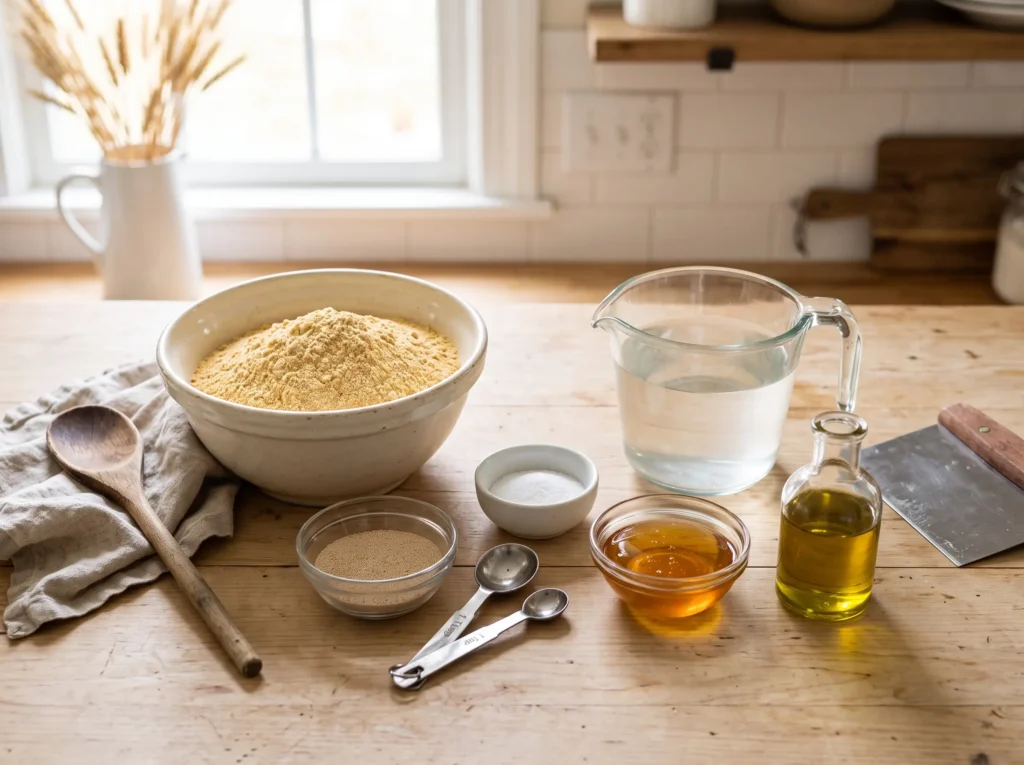
Dry Ingredients:
- 4 cups whole grain einkorn flour (or use sifted einkorn for a lighter, softer crumb)
- 1 ½ teaspoons fine sea salt
- 2 ¼ teaspoons active dry yeast (one standard packet)
Wet Ingredients:
- 1 ½ cups warm water (between 95°F and 105°F — warm enough to activate yeast without killing it)
- 2 tablespoons raw honey or pure maple syrup
- 2 tablespoons extra virgin olive oil (plus a little more for greasing the bowl)
- 1 tablespoon apple cider vinegar (supports gluten development and improves rise)
Substitution Tips:
- Swap honey for coconut nectar for a lower glycemic sweetener
- Use avocado oil instead of olive oil for a more neutral flavor
- Add 1 tablespoon of psyllium husk for extra structural support if your dough feels too slack
Each ingredient here plays a purpose. The vinegar might surprise you, but it’s a quiet powerhouse that strengthens einkorn’s delicate gluten network and gives your loaf a noticeably better texture.
Timing
- Prep Time: 20 minutes
- First Rise: 45–60 minutes
- Second Rise: 20–30 minutes
- Bake Time: 35 minutes
- Total Time: Approximately 2 hours
This timeline is about 25% shorter than a standard sourdough loaf, making this einkorn bread recipe a realistic choice even on busy weekdays. You don’t need a stand mixer, a proofing drawer, or any special equipment — just a bowl, a loaf pan, and a warm corner of your kitchen.
How to Make Einkorn Bread
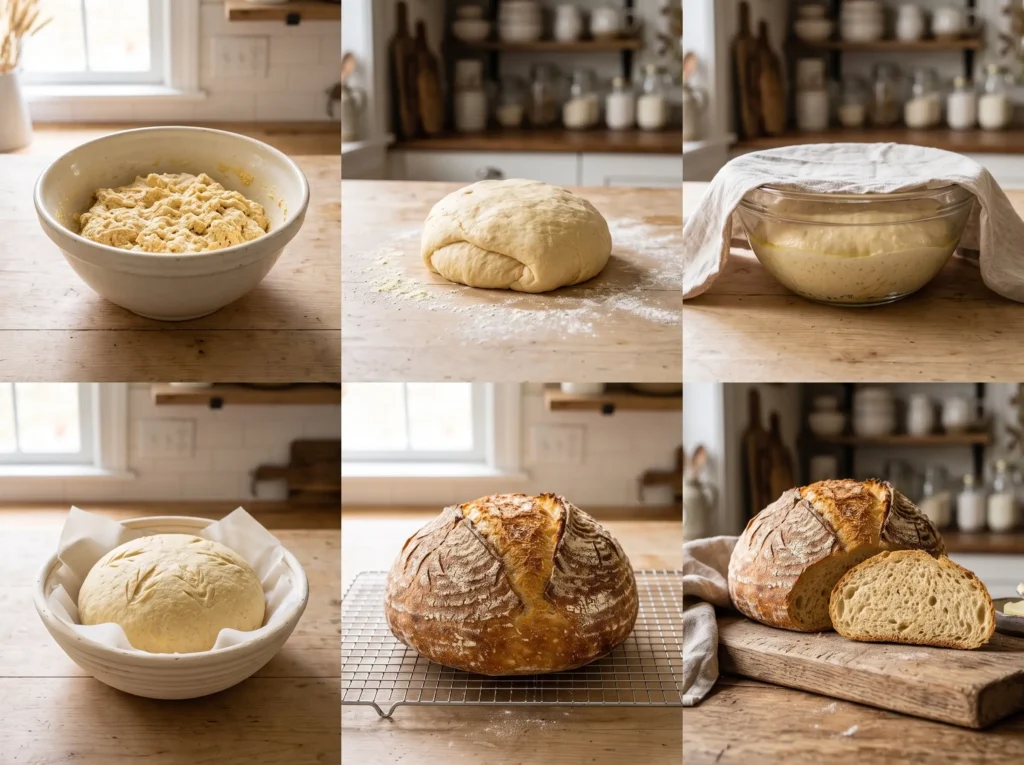
Step 1: Wake Up Your Yeast
In a small bowl or measuring cup, combine warm water, honey, and yeast. Stir gently and let the mixture sit undisturbed for 8–10 minutes. You’re looking for a foamy, bubbly surface — that’s your sign the yeast is alive and ready to work. If nothing happens after 10 minutes, the yeast is likely dead or the water was too hot. Start fresh before moving on.
Step 2: Combine Your Dry Ingredients
In a large mixing bowl, whisk together einkorn flour and salt until evenly distributed. Creating a uniform dry base now prevents pockets of saltiness in the finished loaf.
Step 3: Build the Dough
Pour the activated yeast mixture, olive oil, and apple cider vinegar into the dry ingredients. Stir with a wooden spoon or silicone spatula until everything comes together into a cohesive, slightly sticky dough. Resist the urge to add more flour here — einkorn dough is naturally stickier than modern wheat dough, and that’s perfectly fine.
Step 4: Knead with Care
Turn the dough onto a lightly floured surface and knead gently for just 3–4 minutes. This is not the time for aggressive stretching and folding. Einkorn contains a more fragile gluten network than conventional wheat, and overworking it breaks down that structure entirely, leaving you with a flat, dense loaf.
Step 5: First Rise
Shape the dough into a smooth ball, place it in a lightly oiled bowl, and cover with a clean kitchen towel or plastic wrap. Set it in a warm, draft-free spot for 45–60 minutes. Don’t expect it to double in size the way conventional wheat dough does — einkorn rises more modestly, and that’s completely normal. Look for a noticeable puff and slight increase in volume.
Step 6: Shape the Loaf
Once risen, gently punch down the dough and shape an einkorn sandwich loaf. Place it seam-side down in a greased 9×5 inch loaf pan. Handle the dough as little as possible during this step to preserve the air you just worked to build.
Step 7: Second Rise
Cover and let the dough rest for another 20–30 minutes while you preheat your oven to 375°F. The loaf won’t rise dramatically during this phase either — trust the process.
Step 8: Bake to Golden Perfection
Bake the einkorn loaf for 33–37 minutes until the top is deep golden brown and the internal temperature reads 190°F on an instant-read thermometer. Remove from the pan and let it cool completely on a wire rack — at least 45 minutes — before slicing. Cutting in too early is one of the most common mistakes bakers make, and it results in a gummy, underdone-tasting crumb every time.
Nutritional Information
Per slice (based on 12 even slices):
| Nutrient | Amount |
| Calories | 145 |
| Total Fat | 3g |
| Carbohydrates | 25g |
| Dietary Fiber | 3.5g |
| Protein | 5.5g |
| Sugar | 2g |
| Iron | 10% DV |
Why You’ll Love This Homemade Einkorn Bread
- Ancient einkorn flour is naturally rich in protein, antioxidants, and carotenoids.
- Research published in the Journal of Agricultural and Food Chemistry found that einkorn contains up to three times more beta-carotene than many standard wheat varieties.
- Whole grain einkorn provides fiber for digestive health.
- Olive oil contributes heart-healthy fats.
- Homemade bread contains fewer preservatives than many store-bought loaves.
Healthier Alternatives for einkorn bread recipe
This einkorn bread recipe is already a step above most conventional bread, but here are a few ways to tailor it further:
- Higher fiber version: Replace ½ cup of einkorn flour with ground oats or flaxseed meal
- Lower sugar: Omit the honey entirely and increase water by one tablespoon — the yeast will still activate well
- Herbed savory loaf: Fold in 1 teaspoon each of dried rosemary and garlic powder for a flavorful, herb-forward variation
- Dairy-free enriched loaf: Substitute water with unsweetened oat milk for a slightly richer, softer crumb
- Egg-enriched version: Add one egg to the wet ingredients for extra protein and a more brioche-like texture
These swaps make this recipe adaptable for a wide range of dietary lifestyles without compromising the quality of the final bake.
Serving Suggestions
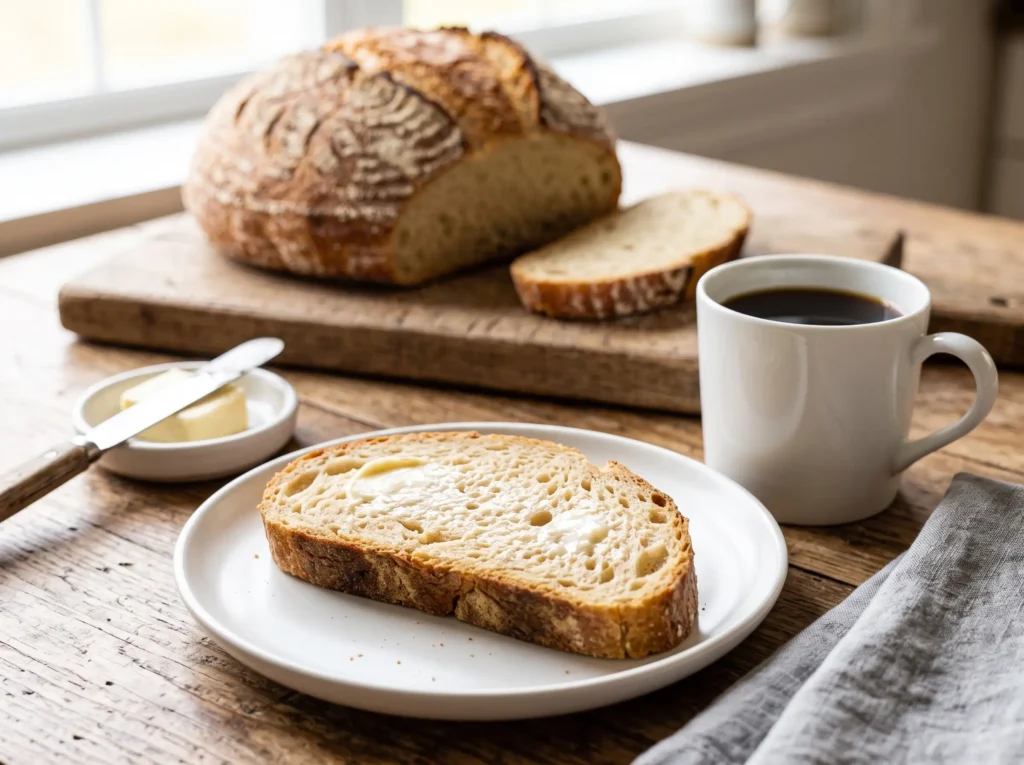
A freshly baked loaf this good deserves more than just butter — though that works beautifully too. Here are some ways to make the most of your einkorn bread:
- Breakfast: Toast thick slices and top with mashed avocado, a drizzle of lemon juice, and red pepper flakes
- Lunch: Use it as the base for a grilled cheese — einkorn’s nutty undertones pair especially well with aged gouda or sharp white cheddar
- Dinner: Serve warm slices alongside a bowl of roasted tomato soup or butternut squash bisque
- Snack board: Arrange slices on a charcuterie board with fig jam, walnuts, and soft goat cheese
- Sweet treat: Lightly toast and drizzle with raw honey and a sprinkle of cinnamon for a no-fuss dessert
Common Mistakes to Avoid
Here are the four most common pitfalls bakers encounter with this einkorn bread recipe — and exactly how to fix them:
1. Over-Kneading the Dough Because einkorn has a weaker gluten network than modern wheat, aggressive kneading tears apart the very structure you need for a good rise. Limit kneading to 3–4 minutes and use a light, gentle touch.
2. Expecting a Large Rise Over-proofing is one of the biggest causes of collapsed einkorn loaves. Unlike commercial white flour dough, einkorn rises subtly. If you wait for it to double, you’ve already gone too far.
3. Adding Too Much Flour to Fix Sticky Dough Einkorn absorbs liquid more slowly than modern wheat. A sticky dough right after mixing is not a problem — it’s expected. Dusting in extra flour throws off the hydration ratio and produces a dry, crumbly crumb.
4. Slicing the Loaf Too Soon The interior of a freshly baked loaf continues cooking on residual heat for several minutes after it comes out of the oven. Slicing early releases steam prematurely and leaves the crumb dense and undercooked-tasting. Always wait at least 45 minutes.
Storing Tips for the Recipe
Proper storage keeps your einkorn bread tasting fresh without sacrificing texture:
- Room temperature: Wrap the cooled loaf in beeswax wrap or store in an airtight container for up to 3 days
- Freezer: Slice the loaf first, then freeze individual slices in a zip-lock bag for up to 3 months — toast them directly from frozen
- Avoid the refrigerator: Cold temperatures accelerate staling in bread. Room temperature or the freezer are your best options
- Make-ahead tip: Prepare the dough through the first rise, shape it, and refrigerate overnight. Pull it out 30 minutes before baking for fresh-baked bread with minimal morning effort
Conclusion
This homemade einkorn bread recipe delivers a golden, nutrient-rich loaf packed with nutty flavor and wholesome ingredients. By sidestepping the four most common mistakes — over-kneading, over-proofing, adding too much flour, and slicing too early — you’ll bake with confidence every single time. Try it this weekend, share your results in the comments below, leave a star rating in the review section, or subscribe to get more wholesome recipes straight to your inbox!
- If you enjoyed this einkorn bread recipe, be sure to try my Ezekiel Bread Recipe for another wholesome, nutrient-rich homemade loaf.
- Looking for more delicious homemade breads? Browse our Bread Recipes collection for easy recipes, baking tips, and family favorites.
FAQs
What makes einkorn flour different from regular wheat flour?
Einkorn is one of the oldest cultivated grains in the world. Learn more about ancient einkorn wheat before baking with this unique flour. It has a simpler genetic structure than modern wheat, a higher protein and antioxidant content, and a more delicate gluten network — which is why it behaves differently in baking and requires a gentler technique.
Why didn’t my einkorn dough rise very much?
That’s normal. Einkorn doesn’t produce the large, dramatic rise you’d see with commercial all-purpose flour. As long as you see a noticeable puff during proofing and the loaf expands in the oven, your bread is on the right track.
Can I use einkorn flour in a 1:1 swap for regular flour?
Not reliably. Einkorn absorbs liquid differently and has weaker gluten, so direct swaps in conventional recipes often don’t work without adjustments to hydration and kneading time. Recipes written specifically for einkorn, like this one, will always give you the best results.
Is einkorn bread suitable for people with gluten sensitivity?
Einkorn contains gluten and is not safe for anyone with celiac disease. However, some people with non-celiac gluten sensitivity report tolerating einkorn better than modern wheat, likely due to its simpler gluten proteins. Always consult a healthcare professional before making dietary changes.
Can I make this recipe without yeast?
Yes. Substitute the yeast with 1 ½ teaspoons of baking powder and 1 teaspoon of baking soda for a quick bread version. The texture will be denser and more crumbly, but it still delivers that signature einkorn flavor.
How do I know when my einkorn bread is fully baked?
The most reliable method is an instant-read thermometer — look for an internal temperature of 190°F. The crust should also be deep golden brown and sound hollow when you tap the bottom of the loaf.
Bake It. Love It. Tell Us About It.
There are no reviews yet. Be the first one to write one.