
Baked Cottage Cheese Eggs (6 Easy High-Protein Flavor Ideas)
Did You Know Most Breakfast Eaters Are Missing Out on 25g of Protein Before Noon?
If you’re still reaching for the same old scrambled eggs every morning, it’s time for a serious upgrade. Baked cottage cheese eggs are taking the breakfast world by storm — and for good reason. This creamy, protein-packed baked egg dish combines two nutritional powerhouses into one effortless breakfast that keeps you full, focused, and satisfied all morning long.
According to the Harvard T.H. Chan School of Public Health protein guide, protein-rich meals may help support satiety and muscle maintenance throughout the day. And a 2023 survey by the International Food Information Council found that more than 68% of Americans want more protein at breakfast but struggle to find recipes that are both quick and flavorful.
Baked cottage cheese eggs solve exactly that problem. With just a handful of ingredients and 6 incredible flavor combinations, you’re about to transform your mornings for good.
Why Baked Cottage Cheese Eggs Work So Well
Baked cottage cheese eggs combine the richness of eggs with the creamy texture and slow-digesting protein found in cottage cheese. The result is a balanced, high-protein breakfast that fits perfectly into low-carb diets, meal prep breakfast routines, and healthy breakfast ideas.
From a cooking perspective, cottage cheese keeps the eggs moist and fluffy during baking, preventing the dry texture common in many egg casseroles. For the best texture, use full-fat cottage cheese because its higher fat content creates a creamier and more stable egg bake. The recipe is also highly customizable, making it ideal for meal prep, low-carb diets, and quick weekday breakfasts.
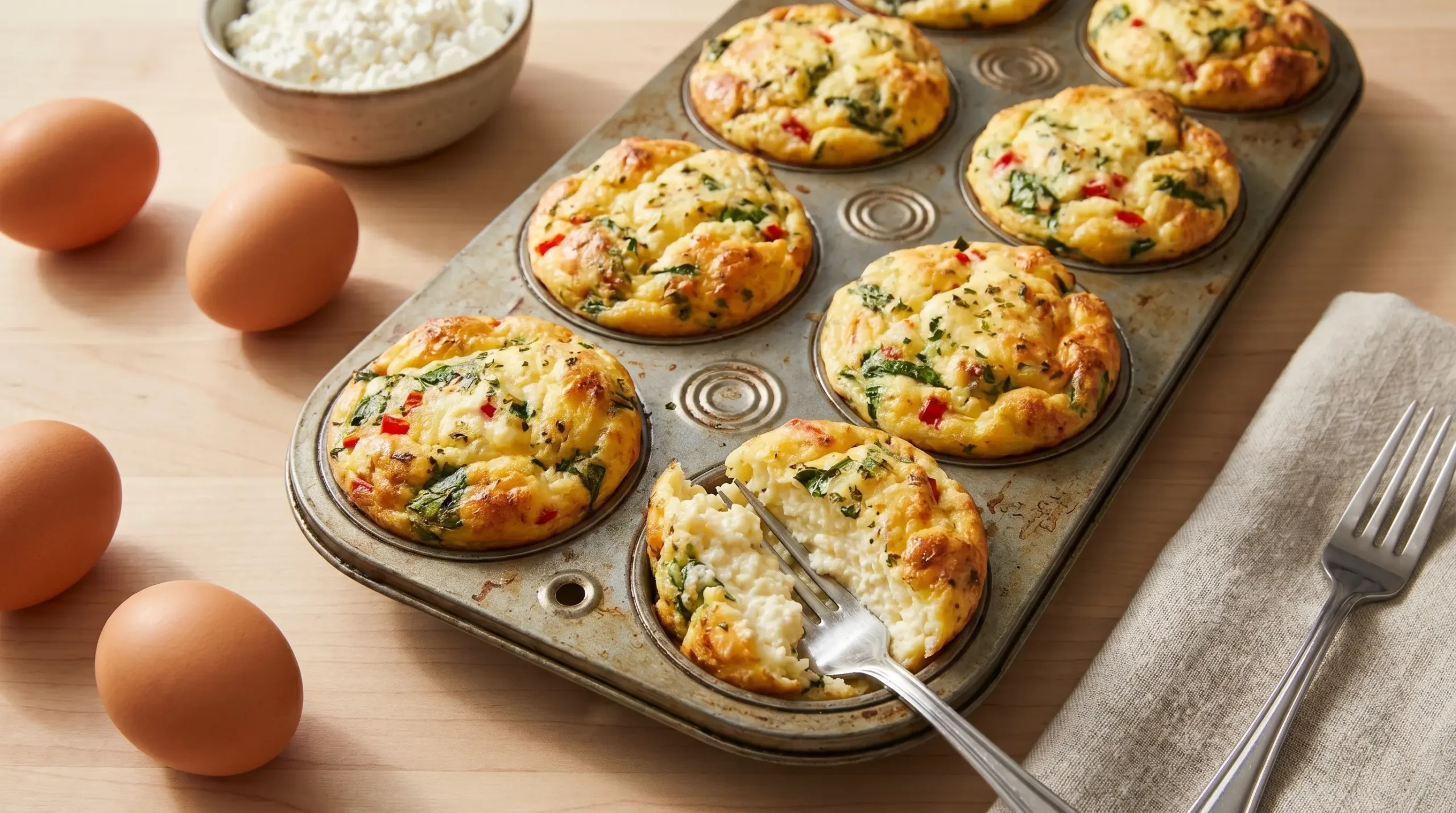
Baked Cottage Cheese Eggs
Ingredients
Method
- Preheat oven to 375°F (190°C). Lightly grease a small baking dish, skillet, or ramekins with olive oil or cooking spray.
- In a mixing bowl, combine cottage cheese, shredded cheese, salt, and black pepper. Stir until smooth and well combined. Add any cooked vegetables, herbs, or flavor mix-ins.

- Spread the cottage cheese mixture evenly into the prepared baking dish. Use the back of a spoon to create 4 shallow wells.
- Crack one egg into each well. Season lightly with salt and pepper and add optional toppings if desired.
- Bake for 18 to 22 minutes, depending on your preferred egg texture. The eggs should be set and the edges lightly golden.
- Remove from the oven and let rest for 2 minutes. Garnish with fresh herbs, extra cheese, pesto, or hot sauce before serving.


Notes
- Full-fat cottage cheese creates the creamiest texture.
- Drain watery cottage cheese before baking for better consistency.
- Sauté vegetables before adding to avoid excess moisture.
- Great for meal prep and reheats well.
Table of Contents
Ingredients for Baked Cottage Cheese Eggs
One reason baked cottage cheese eggs are becoming one of the most popular cottage cheese recipes is their flexibility — swap, sub, and customize freely!
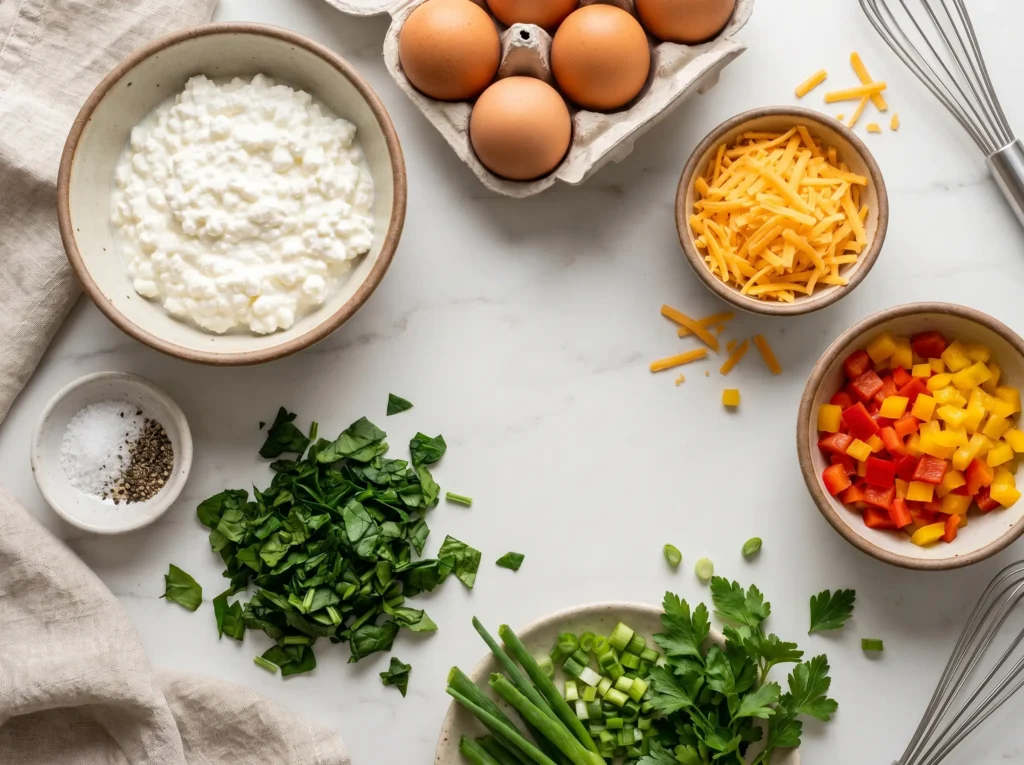
Base Ingredients (Serves 2):
- 4 large eggs (free-range or pasture-raised for best flavor)
- ½ cup full-fat cottage cheese (or low-fat for a lighter version)
- ¼ cup shredded cheese of choice (cheddar, mozzarella, or parmesan)
- Salt and black pepper to taste
- 1 tsp olive oil or cooking spray (for greasing)
Flavor Add-Ins (choose one of the 6 combos below):
- Mediterranean — sun-dried tomatoes, kalamata olives, crumbled feta, fresh basil
- Garden Herb — fresh chives, dill, parsley, baby spinach, garlic powder
- Spicy Tex-Mex — diced jalapeño, cumin, smoked paprika, black beans, salsa
- Smoky Bacon & Chive — cooked crumbled bacon, chives, smoked cheddar, a dash of hot sauce
- Pesto & Roasted Tomato — 1 tbsp basil pesto, halved cherry tomatoes, pine nuts, mozzarella
- Mushroom & Thyme — sautéed mushrooms, fresh thyme, gruyère, a pinch of nutmeg
Smart Substitutions:
- Dairy-free? Swap cottage cheese for a plain, unsweetened plant-based yogurt or silken tofu blended smooth.
- Egg-free? This recipe relies on eggs, but you can substitute 1–2 eggs with a flax egg for partial binding.
- Lower sodium? Use a no-salt-added cottage cheese and reduce the shredded cheese.
Quick Recipe Overview
Here’s the good news: baked cottage cheese eggs are faster than your average egg casserole by about 30%.
| Phase | Time |
| Prep Time | 5 minutes |
| Cook Time | 20–22 minutes |
| Total Time | ~27 minutes |
| Servings | 2 (easily doubled or tripled) |
Compare that to the average breakfast casserole clocking in at 45–60 minutes — this dish wins on weekdays AND weekends.
How to Make Baked Cottage Cheese Eggs
Step 1: Preheat and Prep Your Baking Dish
Preheat your oven to 375°F (190°C). Lightly grease a small oven-safe skillet, a ramekin, or a standard 8×8-inch baking dish with olive oil or cooking spray. This step is non-negotiable — cottage cheese has a tendency to stick, and nobody wants to lose half their breakfast to the pan.
Pro tip: Individual ramekins make gorgeous, Instagram-worthy single servings and reduce cook time by about 3–4 minutes.
Step 2: Mix Your Cottage Cheese Base
In a mixing bowl, combine the cottage cheese, shredded cheese, salt, and pepper. Stir until the mixture is well blended. At this stage, fold in any dry or pre-cooked flavor add-ins from your chosen combination — like bacon crumbles, sautéed mushrooms, sun-dried tomatoes, or beans.
Pro tip: If your cottage cheese is extra watery, drain it briefly through a fine mesh sieve for a firmer, creamier bake.
Step 3: Transfer and Create Wells
Pour your cottage cheese mixture into the prepared dish and spread it into an even layer. Using the back of a spoon, create 4 shallow wells — one for each egg. This keeps the eggs perfectly nestled in the creamy base and ensures even cooking.
Step 4: Crack in the Eggs
Carefully crack one egg into each well. Season the tops of the eggs lightly with salt and pepper. This is where your flavor personality shines — add your fresh herbs, toppings, or sauces at this point before the dish goes into the oven.
Pro tip: Crack each egg into a small cup first before sliding it into the well. This prevents broken yolks and shell mishaps.
Step 5: Bake the Creamy Baked Eggs to Perfection
Slide your dish into the preheated oven and bake for 18–22 minutes, depending on how you like your yolks:
- Runny yolks: 18 minutes
- Jammy, slightly set yolks: 20 minutes
- Fully set yolks: 22+ minutes
Watch the edges of the cottage cheese — they should turn lightly golden and pull slightly from the sides of the dish.
Step 6: Garnish and Serve
Remove the dish from the oven and let it rest for 2 minutes (the eggs will continue to cook slightly). Top with your finishing garnishes — fresh herbs, a drizzle of hot sauce, extra cheese, or a dollop of pesto — and serve immediately while hot and creamy.
Nutrition Facts
Here’s the nutritional breakdown for the base recipe (2 servings, using full-fat cottage cheese and cheddar), without flavor add-ins:
| Nutrient | Per Serving (2 eggs + base) |
| Calories | ~280 kcal |
| Protein | 24g |
| Total Fat | 17g |
| Saturated Fat | 7g |
| Carbohydrates | 4g |
| Fiber | 0g |
| Sugar | 2g |
| Sodium | 480mg |
| Calcium | 20% DV |
Key nutritional highlights:
- Each serving delivers approximately 24g of complete protein — nearly half the daily recommended intake for a sedentary adult.
- Cottage cheese is rich in casein protein, which digests slowly and keeps you fuller longer than whey.
- Eggs provide all 9 essential amino acids, choline for brain health, and vitamin D.
- The dish is naturally low-carb and keto-friendly in its base form.
Note: Nutritional values will vary based on flavor add-ins and ingredient brands.
Healthy Substitutions & Variations
Want to dial in the nutrition even further? Here are some smart, flavor-preserving swaps:
Lower calories: Use 2% or low-fat cottage cheese and reduce the shredded cheese to 2 tablespoons. You’ll save about 60–80 calories per serving without sacrificing the creamy texture.
Higher protein: Add 2 tablespoons of plain Greek yogurt to the cottage cheese base to push protein past 28g per serving.
Dairy-free version: Replace cottage cheese with blended silken tofu seasoned with a pinch of nutritional yeast, garlic powder, and lemon juice. It mimics the texture beautifully.
Gluten-free: The base recipe is already 100% gluten-free. Just double-check your add-ins (some pre-made sauces and seasonings contain hidden gluten).
Vegetable-forward: Replace one egg per person with a thick slice of zucchini or roasted bell pepper to cut calories while boosting fiber and micronutrient content.
Lower sodium: Opt for no-salt-added cottage cheese and use fresh herbs instead of seasoning blends to keep sodium under 300mg per serving.
Serving Ideas
Baked cottage cheese eggs are incredibly versatile. Here’s how to plate them for every occasion:

Weekday mornings: Serve straight from the ramekin with a slice of whole-grain toast or a handful of fresh arugula dressed with lemon and olive oil. Done in under 30 minutes, start to finish.
Weekend brunch spread: Pair with roasted asparagus, a fresh fruit salad, and sparkling water with mint for a restaurant-quality brunch that costs a fraction of dining out.
Meal prep breakfast bowls: Bake in a larger dish, portion into containers, and refrigerate for up to 4 days. Reheat in the microwave for 60–90 seconds and top with fresh herbs right before eating.
Post-workout recovery: The Smoky Bacon & Chive or Spicy Tex-Mex versions are ideal after a workout — high protein, moderate fat, and bold flavor to satisfy your appetite.
Elegant dinner: Yes, eggs for dinner! Serve the Mediterranean or Mushroom & Thyme version alongside a simple green salad and crusty sourdough for a light yet satisfying evening meal.
Common Mistakes to Avoid
Even a recipe this simple has a few pitfalls. Here’s what to watch out for:
1. Skipping the greasing step. Cottage cheese sticks. Always grease your dish generously, or you’ll lose half the base on cleanup.
2. Overbaking the eggs. The most common mistake — rubbery, chalky yolks are nobody’s friend. Start checking at the 18-minute mark and pull the dish when the whites are just set.
3. Using watery cottage cheese without draining. Excess liquid can make the base soupy instead of creamy. A quick 5-minute drain through a sieve solves this.
4. Adding raw vegetables directly. Dense veggies like mushrooms, zucchini, or bell peppers release water during baking, which can waterlog your dish. Always sauté them briefly first.
5. Overfilling the dish. Leave about ¼ inch of headspace so the eggs don’t spill over the sides as they puff up during baking.
6. Not resting the dish after baking. Two minutes of rest allows the eggs to finish setting gently and the cottage cheese to stabilize. Skip this and you’ll end up with runnier results than intended.
Storage & Meal Prep Tips
Refrigerating leftovers: Allow the baked cottage cheese eggs to cool completely before covering. Store in an airtight container in the refrigerator for up to 4 days. The texture remains excellent — slightly firmer after chilling, but still delicious.
Reheating: Microwave individual portions on medium power for 60–90 seconds, or reheat in a 325°F oven for 8–10 minutes. Avoid high-heat reheating, which toughens the eggs.
Freezing: While possible, freezing is not recommended for this dish. Eggs and cottage cheese both change texture significantly when frozen and thawed, resulting in a watery, grainy consistency.
Meal prep ahead: You can mix the cottage cheese base (without the eggs) and store it in the fridge for up to 3 days. When ready to bake, simply pour into your dish, crack in the eggs, and bake as directed.
Storing flavor add-ins separately: If prepping for the week, keep cooked add-ins (bacon, mushrooms, roasted tomatoes) stored separately and mix them in just before baking for the freshest results.
Conclusion
Baked cottage cheese eggs are one of the easiest high-protein breakfast ideas for busy mornings — creamy, customizable, and endlessly satisfying. With 6 bold flavor combinations, smart ingredient swaps, and simple steps, this dish fits every lifestyle and schedule. Whether you meal prep on Sunday or whip it up fresh on a weekday, it delivers every single time.
Ready to transform your breakfast routine? Try your favorite flavor combination today and let us know how it turned out! Drop your review in the comments below, share your photos, and subscribe to our newsletter for more easy, high-protein recipes delivered straight to your inbox.
More Healthy Breakfast Recipes to Try
If you enjoy these baked cottage cheese eggs, you may also love my banana protein muffins for a grab-and-go breakfast, this hearty ezekiel bread recipe, or explore more ideas in the breakfast bakes category.
Frequently Asked Questions
Is cottage cheese supposed to melt when baked with eggs?
Not exactly. Cottage cheese softens and blends into the eggs during baking, creating a creamy, custard-like texture instead of melting completely like mozzarella or cheddar. That creamy texture is what makes baked cottage cheese eggs so rich and satisfying.
Why did my baked cottage cheese eggs turn rubbery?
Rubbery eggs are usually caused by overbaking or using heat that is too high. For the best texture, bake at 375°F and begin checking the dish around the 18-minute mark. The eggs should look just set while still slightly soft in the center.
How much protein do baked cottage cheese eggs contain?
A typical serving made with two eggs and cottage cheese provides around 24 grams of protein. Adding Greek yogurt, turkey bacon, or extra cheese can increase the protein even more. This easy egg recipe is also naturally low in carbohydrates, making it a great option for high-protein and low-carb breakfast routines
Are baked cottage cheese eggs good for kids?
Yes. This recipe is family-friendly and easy to customize for children. Milder flavor combinations like Garden Herb or Pesto & Roasted Tomato are usually the most kid-friendly options. You can also let kids choose their own toppings to make breakfast more fun.
What type of baking dish works best?
Ceramic ramekins, cast iron skillets, and small baking dishes work best because they distribute heat evenly. Thin metal pans can cook the edges too quickly before the center finishes baking.
Can I prepare baked cottage cheese eggs ahead of time?
Yes. You can prepare the cottage cheese mixture and flavor add-ins the night before and refrigerate them overnight. For the best texture, crack the eggs into the dish right before baking rather than storing raw eggs in the mixture overnight.
How do I add vegetables without making the dish watery?
Always cook high-moisture vegetables like mushrooms, spinach, zucchini, or bell peppers before adding them to the dish. A quick sauté removes excess water and helps keep the egg bake creamy instead of soggy.
Bake It. Love It. Tell Us About It.
There are no reviews yet. Be the first one to write one.