
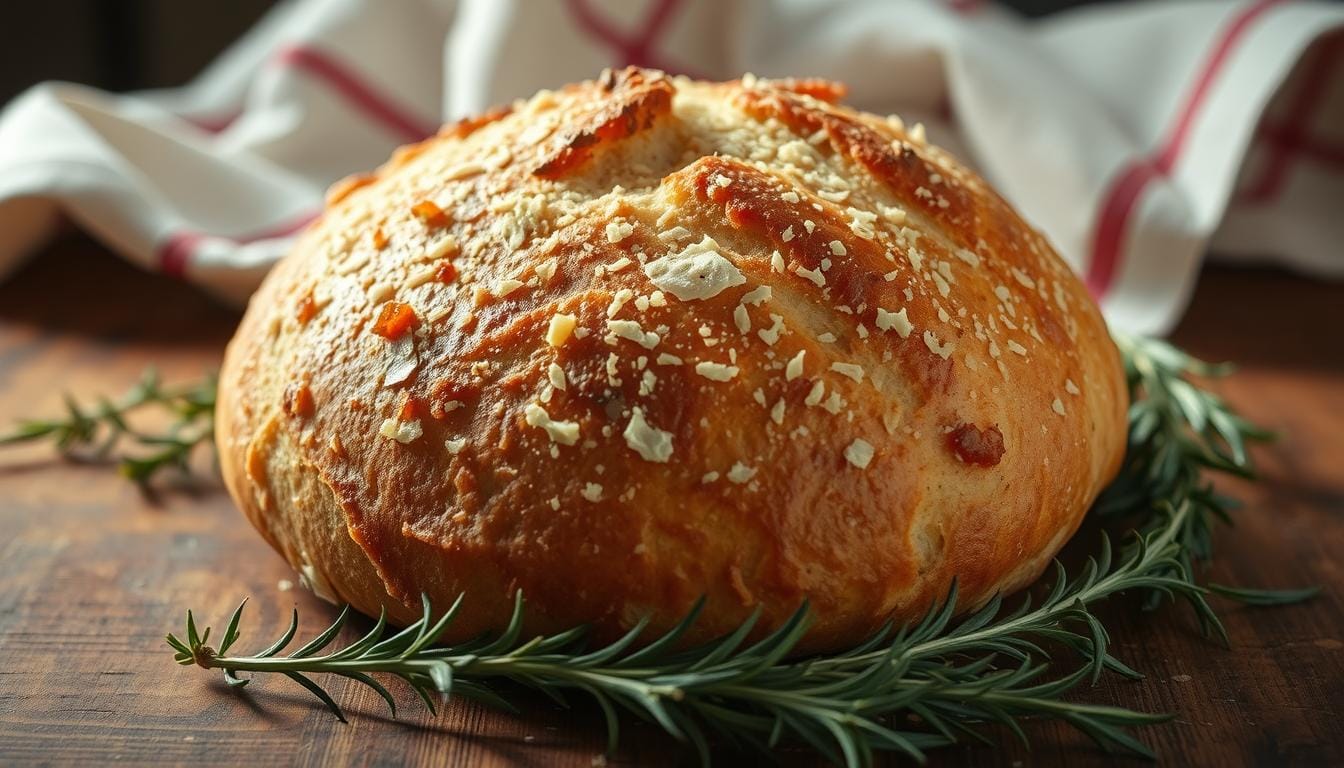
Perfect Parmesan Bread Recipe (Easy, Crispy & Homemade)
Ever wondered why your homemade bread doesn’t taste like the bakery’s? The secret to perfect Parmesan bread is easier than you think!
Making this bread at home is more than just a recipe. It’s about creating a special experience in your kitchen. With basic ingredients and simple techniques, you can make a crispy parmesan bread that wows everyone.
When you make parmesan bread at home, you control every ingredient. This means your bread will be fresher and taste better than store-bought. Whether you’re an experienced baker or just starting out, this recipe will help you every step of the way.
Next, we’ll show you how to make cheesy bread in five easy steps. Get ready to enjoy the amazing smell of freshly baked bread with a delicious parmesan flavor.
Looking for more ideas? Explore our collection of homemade bread recipes for even more baking inspiration.
Table of Contents
Why Homemade Parmesan Bread Is Worth Making
Making your own homemade bread at home turns a simple meal into a special treat. It’s not just about mixing ingredients. Homemade bread brings a world of flavors, health benefits, and joy that store-bought can’t offer.
There’s more to baking parmesan bread than just taste. Let’s see why making it yourself is a tasty choice.
Benefits of Baking Your Own Bread
- Total control over ingredient quality
- Fresher and more nutritious than packaged options
- Elimination of unnecessary preservatives
- Therapeutic baking experience
Cost-Effectiveness vs. Store-Bought
Homemade parmesan bread can save you money. Artisan loaves cost $5-$8, but making your own is just $1-$2 per loaf.
Customization Possibilities
Your parmesan bread lets you get creative. Add extra herbs or cheese. You can also change ingredients for special diets.
Baking bread is more than a cooking task—it’s an art form that connects you with a timeless tradition of nourishing yourself and your loved ones.
Essential Ingredients for Perfect homemade Bread
Making garlic parmesan bread starts with choosing the right high-quality ingredients. The quality of your Italian parmesan bread depends on what you choose. Each ingredient plays a key role in making the bread delicious.
For a classic parmesan bread recipe, you’ll need a few important ingredients:
- Bread Flour: The protein-rich base that provides structure
- Active Dry Yeast: Essential for making the bread rise
- Kosher Salt: Enhances overall flavor profile
- Granulated Sugar: Feeds the yeast and adds subtle sweetness
- Warm Water: Activates the yeast
- Whole Milk: Creates a richer, softer texture
- Unsalted Butter: Adds richness and flavor
- Freshly Grated Parmesan Cheese: The star ingredient
When making garlic parmesan bread, think about adding minced fresh garlic or garlic powder. This will make the flavor even better. For authentic Italian parmesan bread, always use freshly grated Parmesan cheese for the best flavor. Stay away from pre-grated cheese, as it can have additives that change the bread’s texture.
Pro tip: Choose a good-quality Parmigiano-Reggiano for the best Italian flavor. Its nutty, sharp taste will make your homemade bread truly special.
Kitchen Tools and Equipment Needed
To make tasty parmesan bread rolls and sticks, you need the right tools. Whether you’re new to baking or have experience, the right equipment makes the process better and more fun.
Basic Requirements for Bread Making
First, you’ll need some basic tools to begin. The right tools can make your homemade bread amazing.
- Large mixing bowls
- Measuring cups and spoons
- Loaf pan or baking sheet
- Oven mitts
- Cooling rack
Optional Tools for Enhanced Bread Preparation
Some tools can make your cheesy bread even better. These optional items help make your baking easier and more precise.
- Stand mixer with dough hook
- Bread machine
- Digital kitchen scale
- Pastry brush
- Dough scraper
Precise Measuring Equipment
Getting your measurements right is key for great bread. Invest in quality measuring tools to make sure your parmesan bread is perfect every time.
| Measuring Tool | Purpose | Recommended Type |
|---|---|---|
| Liquid Measuring Cup | Measure wet ingredients | Glass or clear plastic with markings |
| Dry Measuring Cups | Measure flour, cheese, herbs | Stainless steel or plastic with flat top |
| Digital Kitchen Scale | Precise ingredient weighing | Electronic with gram/ounce settings |
With these tools, you’re ready to make delicious parmesan bread rolls. They’ll surely impress your loved ones. Remember, good tools are the key to great baking!
Understanding Yeast and Dough Preparation
Mastering yeast and dough preparation is key to making delicious parmesan bread twists. Yeast is a living thing that makes bread come to life. It turns simple ingredients into a magical culinary experience. Knowing how yeast works lets you create amazing homemade bread.
To activate your yeast, follow these steps:
- Use warm water between 100-110°F
- Select fresh, active dry yeast
- Allow yeast to bloom for 5-10 minutes
- Watch for a foamy surface indicating active yeast
Preparing dough for parmesan bread twists requires patience and proper technique. Start by mixing your dry ingredients. This creates a smooth mix that helps yeast grow. Kneading develops gluten, which gives your bread its texture and structure.
Different shapes, like parmesan bread twists, need special dough handling. Gentle stretching and folding create those beautiful twist patterns. This also keeps the bread’s delicate inside intact.
- Knead dough until smooth and elastic
- Rest dough in a warm, draft-free area
- Stretch carefully when forming twists
Your hard work in understanding yeast and dough preparation will make your home baking better. You’ll get perfect parmesan bread twists every time.
Making the Perfect Parmesan Bread
Making homemade parmesan bread needs precision and care. Your recipe will come to life with careful preparation. It involves several key steps to turn simple ingredients into a delicious loaf.
Mixing the Ingredients
Begin by gathering all ingredients at room temperature. Start with dry ingredients, making a smooth base for your bread. Here’s how to do it:
- Sift flour to remove any lumps
- Grate fresh parmesan cheese finely
- Dissolve yeast in warm water
- Mix wet and dry ingredients gradually
Kneading Techniques
Kneading makes the dough strong and even. For your homemade parmesan bread, you can use two methods:
- Hand Kneading: Push and fold dough for 10-12 minutes
- Stand Mixer: Use dough hook attachment for 5-7 minutes
Rising and Proofing Tips
Proper rising is key for the perfect texture. Find a warm, draft-free spot with a steady temperature. Your dough should double in size, which takes 1-2 hours.
Look for these signs of perfectly proofed dough:
- Soft and puffy appearance
- Gentle indentation when pressed
- Slight dome shape
Adding Herbs and Cheese Variations
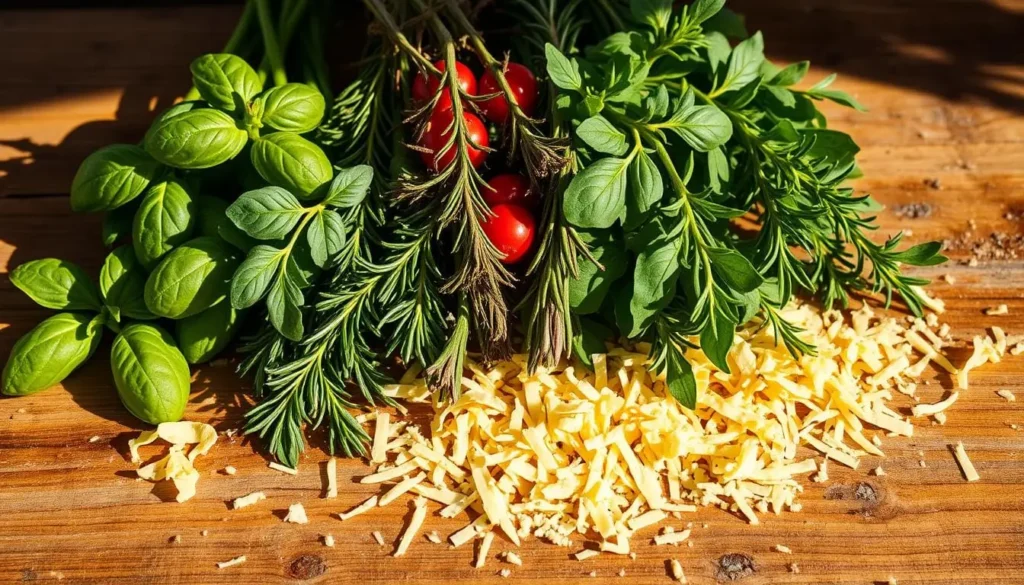
Elevate your Italian Parmesan bread by trying a variety of herbs and cheeses. The perfect pairing can transform an ordinary loaf into something truly irresistible.
Here are some tasty herb and cheese options for your garlic parmesan bread:
- Classic Italian Herb Blend:
- Dried rosemary
- Fresh basil leaves
- Oregano
- Cheese Combinations:
- Aged Romano
- Pecorino
- Asiago
To add herbs to your bread, chop them finely and mix them into the dough. This way, the flavors spread evenly throughout.
| Herb Type | Flavor Profile | Best Used With |
|---|---|---|
| Rosemary | Robust, piney | Garlic parmesan bread |
| Basil | Fresh, sweet | Light parmesan loaves |
| Oregano | Earthy, slightly bitter | Hearty bread varieties |
For the best garlic Parmesan bread, roast garlic cloves and incorporate them into the dough. This technique creates pockets of rich, mellow garlic flavor, making your bread irresistibly delicious.
Baking Techniques and Temperature Control
Learning to bake parmesan bread needs precision and knowledge of key techniques. The right temperature and method can make your homemade bread amazing. It will turn into a crispy parmesan bread that will wow you.
Optimal Oven Settings for Perfect Baked Parmesan Bread
To bake the perfect parmesan bread, first understand your oven. Preheat it to 425°F (218°C) for the best results. This temperature gives a golden crust and a soft inside.
- Preheat oven for at least 30 minutes
- Use a baking stone or heavy baking sheet
- Position rack in the middle of the oven
Timing and Doneness Tests
Knowing when your bread is done is key. It usually takes 25-35 minutes. Here are simple ways to check:
- Tap the bottom of the bread – it should sound hollow
- Check for a deep golden-brown color
- Use a digital thermometer (internal temperature should reach 190-200°F)
Crafting the Perfect Crust
To achieve a perfectly crispy parmesan bread crust, introduce steam during the first 10 minutes of baking. A helpful tip is to place a shallow pan of water on the bottom rack or mist water into the oven before closing the door. This technique helps create a crisp, bakery-style crust for your Parmesan bread.
Remember, every oven is different. Don’t worry if your first try isn’t perfect. With practice and patience, you’ll make the most delicious parmesan bread.
Storage and Serving Suggestions
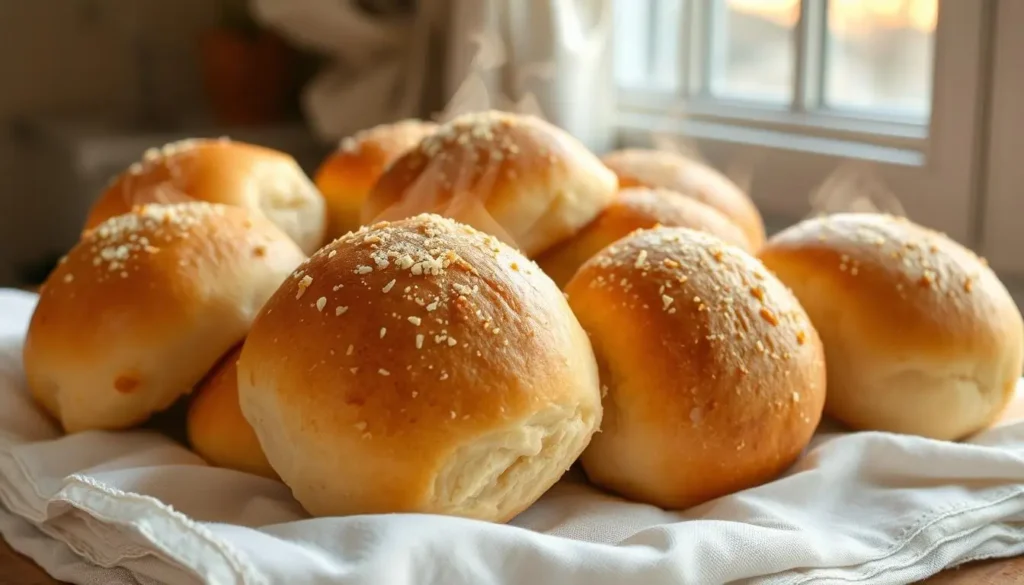
Keeping your homemade Parmesan bread rolls fresh is simple with proper storage. For short-term storage, wrap them in a clean kitchen towel or place them in an airtight container at room temperature, where they will stay delicious for 2–3 days. If you want to keep them fresh for longer, freezing is an excellent option.
Freezing and Reheating Tips
- Wrap parmesan bread sticks individually in plastic wrap
- Place wrapped bread in a freezer-safe bag
- Freeze for up to 3 months
- Thaw at room temperature for best texture
Reheating your bread can make it taste like it just came out of the oven. Warm parmesan bread rolls in the oven at 350°F for 5-7 minutes. This will restore their crispy exterior and soft interior.
Serving Suggestions
| Dish Type | Pairing Suggestion |
|---|---|
| Soups | Serve parmesan bread sticks as a crunchy side |
| Salads | Crumble parmesan bread rolls as a topping |
| Main Courses | Use as a complementary bread basket item |
Don’t waste leftover parmesan bread! Turn it into delicious homemade breadcrumbs or crispy croutons. They’re perfect for salads and soups.
Conclusion
Making homemade parmesan bread is more than cooking. It’s a journey in your kitchen. You start with simple ingredients and end up with amazing parmesan bread twists. Each batch you make makes you more confident and skilled in the kitchen.
Learning to make homemade parmesan bread opens up a world of possibilities. You can add rosemary, try different cheese mixes, or work on your kneading. The smell of fresh bread will make your home feel cozy and lively.
Don’t worry if your first loaf isn’t perfect. Every try gets you closer to being a great home baker. Enjoy the process, love the results, and share your creations with others. Baking becomes a fun and rewarding way to connect with a long-standing tradition.
Now you have the skills to make incredible homemade parmesan bread. Start baking today and enjoy the thrill of making something special from scratch.
If you enjoyed this recipe, you should also try this rosemary parmesan bread recipe for a fragrant, herby twist.
FAQ
How long will it take to bake homemade Parmesan bread?
Making parmesan bread takes about 2-3 hours. This includes prep, rising, and baking. You’ll spend around 30-45 minutes actively preparing. The dough needs 1-1.5 hours to rise and proof.
Can this Parmesan bread recipe be made without a mixer?
Yes, you can! Simply knead the dough by hand on a clean surface. While a stand mixer makes the process easier, hand-kneading works just as well and allows you to better feel and understand the dough’s texture.
What type of parmesan cheese works best for this recipe?
Use freshly grated Parmigiano-Reggiano for the best taste. If that’s hard to find, choose high-quality aged parmesan from the fridge. Avoid pre-grated cheese with anti-caking agents.
How do I store homemade parmesan bread?
Keep the bread in an airtight container at room temperature, where it will stay fresh for 2–3 days. If you need to store it longer, freeze it for up to 3 months, wrapping it securely in plastic wrap followed by a layer of foil to protect against freezer burn.
Can I make gluten-free parmesan bread?
Yes,You can use gluten-free bread flour in place of regular flour. Keep in mind that the texture may vary, so adjust the liquid as needed to achieve the proper dough consistency.
What can I do to make my Parmesan bread crispier?
To get a crispy crust, place a pan of hot water on the bottom rack while baking. Brush the top with olive oil or melted butter before baking.
Are there variations I can try with this basic parmesan bread recipe?
Definitely! Try adding garlic, herbs like rosemary or basil, or sun-dried tomatoes. You can also make parmesan bread rolls or breadsticks. The recipe is very versatile.
What should I do if my bread doesn’t rise properly?
Old yeast, water that’s too hot or cold, or a drafty kitchen can cause issues. Make sure your yeast is fresh, use warm water, and rise in a warm, draft-free area.
Can I use pre-grated parmesan cheese?
While it’s possible, pre-grated cheese might not be as good. It often has anti-caking agents that can affect the bread’s texture and taste. Grate fresh parmesan just before using it.
How do I know when the parmesan bread is fully baked?
The bread is done when it’s golden-brown and sounds hollow when tapped. The internal temperature should be about 190-200°F (88-93°C) when checked with a thermometer.