
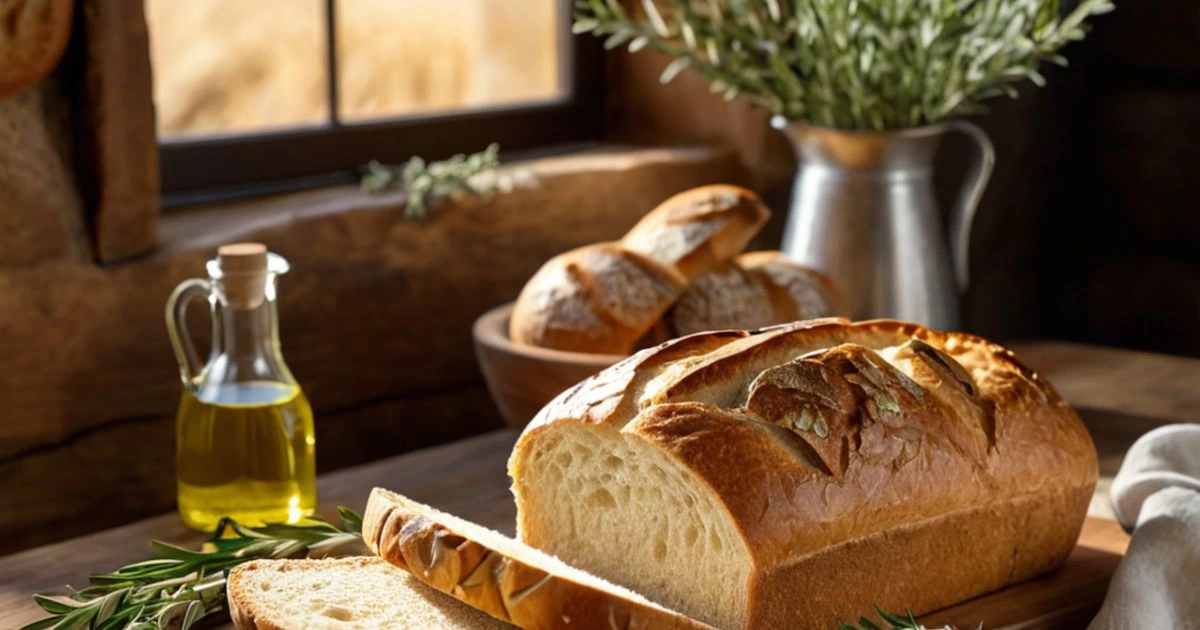
Rosemary Parmesan Bread Recipe – Easy Homemade Loaf
Searching for a homemade bread that fills your kitchen with that cozy, bakery-fresh aroma? This rosemary parmesan bread recipe does exactly that—transforming simple ingredients into a warm, flavorful loaf you’ll love.
As you take this golden rosemary parmesan bread out of the oven, the aroma of rosemary and melted parmesan fills the air—just like an artisan garlic bread from your favorite bakery. It’s a cozy, flavorful loaf that brings warmth and comfort to your table.
Table of Contents
Why This Rosemary Parmesan Bread Recipe Will Become Your Favorite
The perfect rosemary garlic bread or rosemary parmesan bread can take your homemade baking to the next level.This recipe combines amazing flavors and textures. It will make you a better cook and impress everyone you share it with.
Perfect Texture and Flavor of Homemade Rosemary Bread
This rosemary bread recipe delivers bakery-style texture—crunchy on the outside and soft, pillowy inside. The pairing of savory rosemary and rich Parmesan feels both refined and warmly familiar.
- Crispy exterior with a tender crumb
- Aromatic rosemary throughout the loaf
- Rich Parmesan cheese for depth of flavor
Time-Saving Tips for Busy Bakers Making Artisan Garlic Bread
Homemade bread doesn’t have to take forever. Our recipe has quick tips for busy cooks. Prep the dough in advance and let it rise overnight for an easy, stress-free bake.
| Prep Method | Time Saved | Convenience Level |
| Overnight Dough Resting | 30-45 minutes | High |
| Pre-measured Ingredients | 15-20 minutes | Medium |
Health Benefits of Fresh Rosemary
More than a flavorful herb, rosemry herb benefits support your health with every bite. Packed with powerful antioxidants and compounds that help reduce inflammation. Each slice of bread adds flavor and health benefits.
- Rich in antioxidants
- Supports brain health
- Natural anti-inflammatory properties
Artisan Garlic Bread Essentials: Ingredients and Equipment Guide
Making the perfect rosemary parmesan bread needs the right ingredients and tools—especially if you’ve tried this parmesan bread recipe before. Your journey to making artisan garlic bread or rosemary parmesan bread begins with knowing the key ingredients.
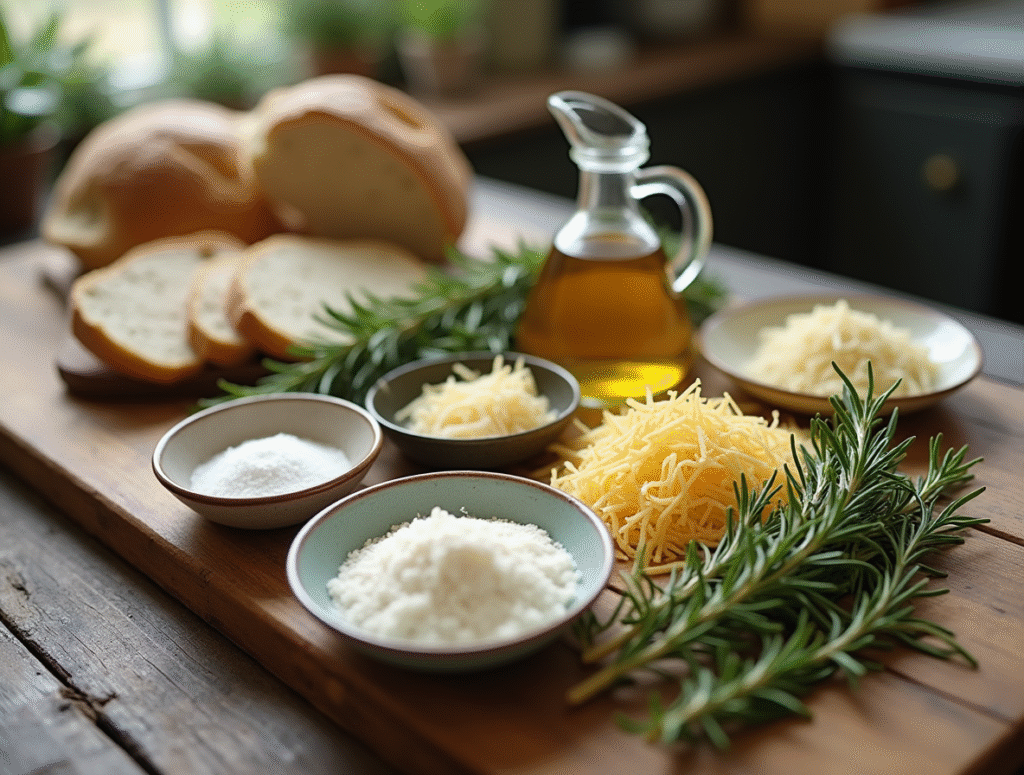
Must-Have Ingredients for Rosemary Parmesan Bread
- High-protein bread flour for optimal gluten development
- Fresh Parmigiano-Reggiano cheese
- Fresh rosemary sprigs
- Active dry yeast
- Kosher salt
- Extra virgin olive oil
Quality is key when making artisan garlic bread or rosemary parmesan bread. Pick fresh, minimally processed ingredients for the best taste.
Essential Baking Equipment
| Equipment | Purpose |
| Dutch oven | Creates perfect crust and even baking |
| Digital kitchen scale | Precise ingredient measurement |
| Proofing basket | Helps dough maintain shape during rising |
| Bench scraper | Assists in dough handling and shaping |
Using top-notch tools makes baking at home better. A good Dutch oven can make your rosemary parmesan bread look like it came from a bakery.
Pro Baking Tips for the Perfect Rosemary Garlic Bread
- Use room temperature ingredients
- Measure flour by weight, not volume
- Allow sufficient time for proper fermentation
- Don’t rush the proofing process
Sticking to quality ingredients and techniques will give you a tasty artisan bread. It will be as good as what you find in professional bakeries.
Step-by-Step Guide to Making Rosemary Parmesan Bread Recipe
Think homemade bread is tricky? This rosemary parmesan bread recipe is easy, beginner-friendly, and fun—perfect for any skill level. You’ll find it simple and rewarding.
Preparing the Dough for Rosemary Bread Recipe
First, get your ingredients ready for this tasty homemade bread. Using fresh, premium ingredients is the key to delicious results:
- 3 cups bread flour
- 2 teaspoons active dry yeast
- 1 cup warm water
- Fresh rosemary (2-3 tablespoons, finely chopped)
- 1/2 cup grated Parmesan cheese
Proofing and Shaping Techniques
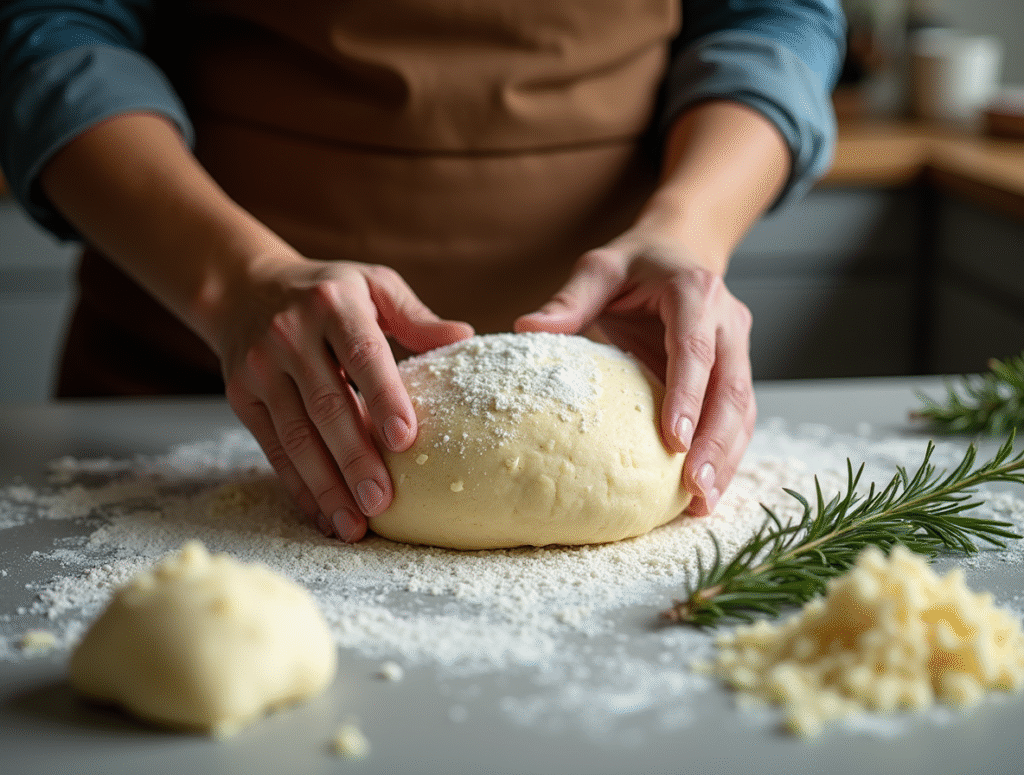
Don’t skip proofing—it’s what gives your bread its depth of flavor and light, fluffy texture. Here’s what to do:
- Mix dry ingredients in a large bowl
- Make a well in the middle of the dry ingredients and pour in the warm water.
- Knead the dough until smooth and elastic
- Let the dough rise in a warm area for roughly 1 hour, or until it doubles in size
- Punch down and shape into a rustic loaf
Baking Instructions and Temperature Guide
Baking your bread needs precision. Preheat your oven to 375°F (190°C). Bake the bread on a stone or sheet for 30 to 35 minutes—it’s ready when golden brown with a hollow sound when tapped underneath.
“Nothing compares to the cozy aroma of freshly baked rosemary bread filling your home.” – Home Baking Enthusiast”
Pro tip: Give the loaf time to cool entirely before cutting for a clean slice. This keeps its texture perfect and prevents crumbling.
Serving Suggestions and Storage Tips for Rosemary Parmesan Bread
Your homemade artisan garlic bread is a treasure that can make any meal special. The bold flavors of rosemary and parmesan complement a wide variety of meals.
Serving suggestions for your rosemary garlic bread include:
- Pair with hearty soups and stews as a delicious dipping bread
- Create gourmet sandwiches using thick, toasted slices
- Serve alongside a cheese board for an elegant appetizer
- Turn it into a tasty bruschetta with chopped tomatoes and fragrant herbs.
Proper storage helps maintain your bread’s freshness, flavor, and soft texture. Fresh bread should be stored at room temperature in an airtight container or wrapped tightly in plastic wrap. Keep your garlic bread fresh by freezing it—good for up to 3 months.
Freezing tips for your rosemary garlic bread:
- Allow bread to cool completely before storing
- Securely wrap the loaf in plastic wrap, followed by aluminum foil for extra protection.
- Place in a freezer-safe bag, removing excess air
- Thaw at room temperature for best results
“Homemade bread is one of life’s greatest comforts, especially when it’s baked with care and quality ingredients.”
When you’re ready to enjoy your stored bread, a quick reheat in the oven can restore its crispy crust and warm, soft interior. Enjoy the same rich taste as when it was first baked.
Conclusion: A Cozy Homemade Bread Worth Trying
Making rosemary parmesan bread at home turns your kitchen into a cozy bakery filled with the aroma of fresh herbs and cheese. Whether new to baking or a pro, this recipe delivers great results.
This bread recipe is loved for being quick, simple, and endlessly customizable. Learning these techniques opens up a world of flavors. Your homemade bread can make any meal better, whether it’s with soup or as a snack.
From flour to loaf, breadmaking is creative and methodical—a nod to bakers through the ages. Enjoy the process, try new flavors, and make this recipe your own. As the bread bakes, your home will be wrapped in the inviting aroma of fresh, warm bread.
Begin your bread-making adventure today. It’s a journey filled with joy and delicious homemade bread. A hit with your taste buds—and everyone at the table.
FAQ: Tips and Variations for Rosemary and Parmesan Bread
Can I replace fresh rosemary with dried rosemary when baking this bread?
Yes, you can use dried rosemary instead of fresh. Use one-third the amount, as dried herbs are more concentrated in flavor. It works perfectly in this bread recipe.
How long does rosemary parmesan bread stay soft and flavorful?
Store your bread in an airtight container or wrap it tightly in plastic. It stays fresh for 2–3 days at room temperature or up to 3 months in the freezer.
Can I use a bread maker for this recipe?
Absolutely! Add the wet ingredients first, then dry ones, and yeast last. Select the basic or white bread cycle for best results. The bread maker makes it easy to prepare artisan garlic bread at home.
Is this rosemary garlic bread suitable for beginners?
Yes, this recipe is beginner-friendly. The steps are simple, and even novice bakers can create a golden, bakery-style loaf with minimal effort.
Can I mix in other herbs with rosemary?
Definitely! Try thyme, oregano, or basil for extra flavor. Just use small amounts to balance the taste so your bread remains perfectly aromatic and savory.
What type of parmesan cheese works best for this bread?
Freshly grated Parmigiano-Reggiano or high-quality parmesan delivers the best flavor and texture. Avoid pre-grated cheese since it can affect how the bread bakes.
How can I tell if my bread is fully baked?
Check the crust—it should be golden brown and sound hollow when tapped on the bottom. For accuracy, use a digital thermometer; the bread is done when the center reaches 190–200°F (88–93°C).