
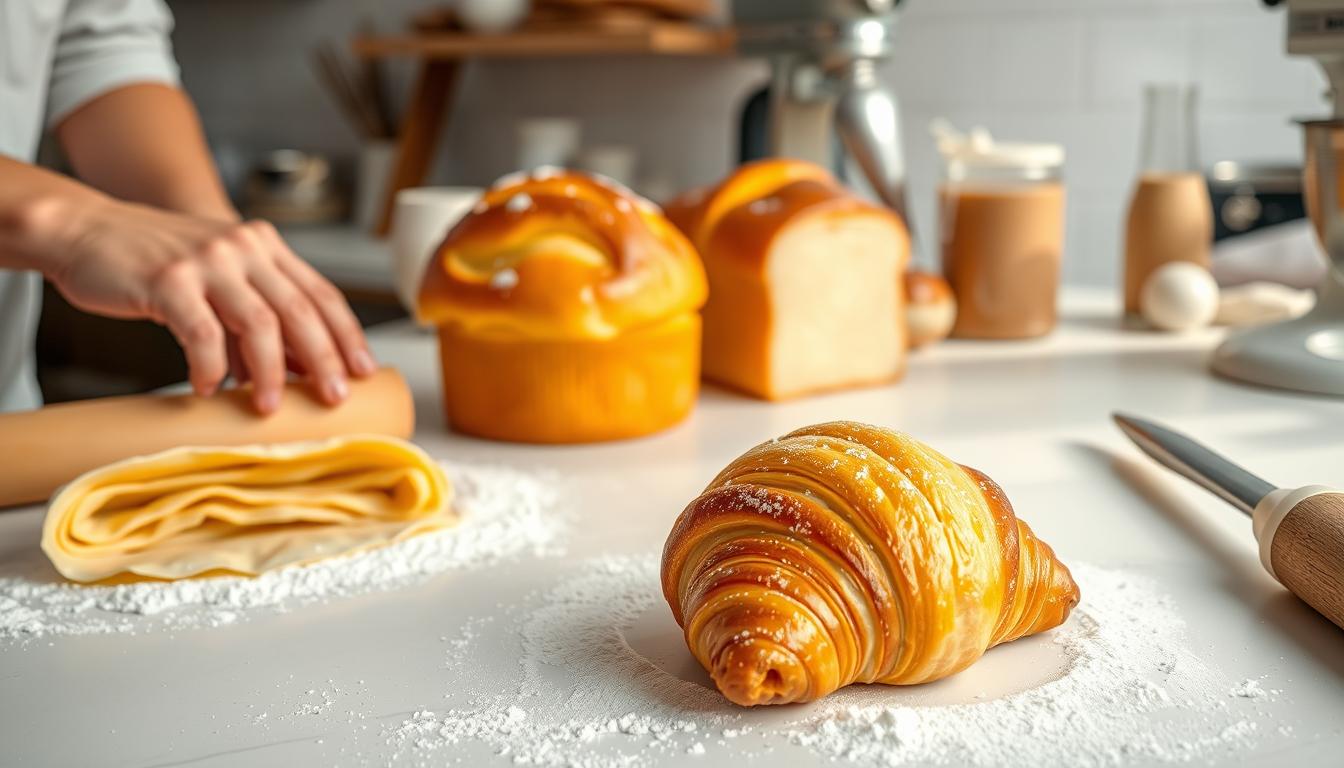
Croissants Brioches: The Best Beginner’s Baking Guide
Ever wondered how simple ingredients become the most tempting French baked goods? Croissants and brioches are the top of pastry art. They mix old traditions with careful baking.
French bakery fans know making perfect croissants and brioches is an art. It needs precision, patience, and love. These French pastries are more than bread. They’re a way to connect with France’s rich food history.
This guide will reveal the secrets of making amazing viennoiserie, including classic croissants brioches. You’ll learn about the lamination process and how to shape like a pro. You’ll turn your kitchen into a French pastry workshop.
If you love baking or are just curious, this guide is for you. It will improve your baking and introduce you to French pastry making.
Table of Contents
Understanding French Viennoiserie Basics
Explore the world of viennoiserie, a French bakery art that turns simple ingredients into amazing pastries like croissants brioches. These treats are a mix of bread and pastry, giving a unique taste experience loved by many.
Origins and History of Croissants and Brioches
Viennoiserie’s story starts in Vienna, Austria, where bakers made the flaky pastry known as the French croissant. In the 19th century, these bakers moved to Paris, starting a culinary change that shaped French baking.
- 1683: First recorded crescent-shaped pastry in Vienna
- 1830s: Austrian bakers introduce the technique to Paris
- Late 19th century: Croissants become a staple of French cuisine
Key Differences Between Croissants and Brioches
Croissants and brioches are both loved viennoiserie treats, but they differ. Knowing these differences will make you appreciate these pastries even more.
| Characteristic | Croissants | Brioches |
|---|---|---|
| Texture | Extremely flaky, layered | Soft, rich, tender |
| Fat Content | Butter-based laminated dough | High egg and butter content |
| Typical Use | Breakfast, snack | Dessert, breakfast |
Essential Characteristics of Perfect Croissants Brioches
To make great viennoiserie, focus on a few key things. Look for a golden-brown look, soft layers, and a buttery smell. The perfect flaky pastry should break apart easily, showing a light, airy inside.
- Butter quality and temperature
- Precise lamination technique
- Proper proofing and baking
Essential Ingredients and Equipment for Croissants and Brioches
Making great croissants and brioches needs careful attention to ingredients and tools. Your success in baking depends on choosing the right parts and knowing their roles.
Professional bakers say quality ingredients are key to making tasty pastries. Let’s look at the important things that turn simple ingredients into amazing viennoiserie.
Crucial Ingredients for Perfect French Pastries
- Flour: Pick high-protein bread flour for the best gluten development
- Butter: Use European-style butter with 82-85% fat for flakier layers
- Fresh active dry yeast for dough to rise right
- High-quality eggs for a rich brioche texture
- Granulated sugar and salt for extra flavor
Professional Baking Equipment for French Pastries
Your tools are key to making professional-quality pastries. Get these essential items to improve your baking:
- Precision digital scale
- Marble pastry board for temperature control
- French rolling pin
- Silicone baking mats
- Proofing baskets (bannetons)
- Bench scraper
Knowing how ingredients and equipment work together turns home baking into art. By picking top-notch parts and using professional tools, you’ll make croissants and brioches as good as Paris’s best.
Mastering Laminated Dough for Croissants
Making perfect laminated dough for croissants is a delicate dance. It turns simple ingredients into amazing butter puff pastry. This skill is key to creating flaky, delicate pastries.
The magic of laminated dough is in its layering. Success depends on several key factors. These factors take baking from ordinary to extraordinary.
Understanding Butter Temperature and Consistency
Butter is key in making perfect laminated dough. It should be:
- Chilled but pliable
- Consistently smooth
- Roughly the same consistency as your dough
The right butter temperature is important. Too cold, and it will crack; too warm, and it will blend into the dough.
Proper Folding and Rolling Techniques
Professional bakers use special techniques to create layers:
- Start with a well-chilled dough and butter block
- Roll out the dough to an even thickness
- Fold the dough in precise, even turns
- Maintain consistent pressure while rolling
Common Lamination Mistakes to Avoid
Watch out for common mistakes that can ruin your dough:
- Overworking the dough
- Inconsistent butter distribution
- Incorrect resting times
- Uneven rolling techniques
With practice and patience, you’ll master laminated dough and make stunning, flaky homemade croissants.
Step-by-Step Brioche Dough Preparation
Making perfect brioche at home needs precision and knowing how to do it. Brioche is a rich, buttery bread that turns simple ingredients into a special treat.
First, collect your main ingredients for the brioche dough:
- High-protein bread flour
- Fresh eggs at room temperature
- Unsalted butter
- Active dry yeast
- Granulated sugar
- Salt
The key to great brioche is its special way of being made. Unlike regular bread dough, brioche needs a gentle mixing approach. This method builds gluten without overworking the dough.
Your mixing style affects the brioche’s texture. Start by waking up the yeast in warm milk. Then, add eggs and flour slowly. The dough should feel soft and a bit sticky, showing it’s well-hydrated.
Kneading brioche takes time. Use a stand mixer with a dough hook, mixing slowly for 10-15 minutes. You want a dough that’s smooth and elastic, passing the windowpane test.
After kneading, mix in cold butter in small pieces. Make sure each piece is fully mixed in before adding the next. This makes the brioche’s crumb tender and rich, just like in a pro patisserie.
Advanced Croissant Shaping Techniques
Mastering croissant brioches needs precision and skill. Professional bakers know shaping croissants is more than just rolling. It’s about using special techniques to make dough into amazing treats.
Classic Crescent Shape Method
The traditional crescent shape is key to authentic croissants. Here’s how to achieve it:
- Roll out laminated dough to an even 1/8-inch thickness
- Cut precise triangular shapes with equal sides
- Stretch the triangle gently to elongate
- Roll from the base toward the pointed tip
- Curve the ends slightly inward to form a crescent
Alternative Shapes and Variations
Try new croissant brioches with these fun variations:
| Shape | Technique | Difficulty Level |
|---|---|---|
| Straight Croissant | Roll without curving ends | Beginner |
| Pain au Chocolat | Rectangle shape with chocolate batons | Intermediate |
| Spiral Croissant | Coiled dough with multiple layers | Advanced |
Professional Tips for Perfect Formation
Improve your baking with these expert tips:
- Maintain consistent dough temperature
- Use a sharp knife for clean cuts
- Ensure even butter distribution
- Proof at controlled room temperature
- Brush with egg wash for golden shine
Keep practicing these techniques. Soon, your homemade croissants will be extraordinary. Each step brings you closer to making pastries that wow bread lovers.
Proofing and Baking Croissants Brioches
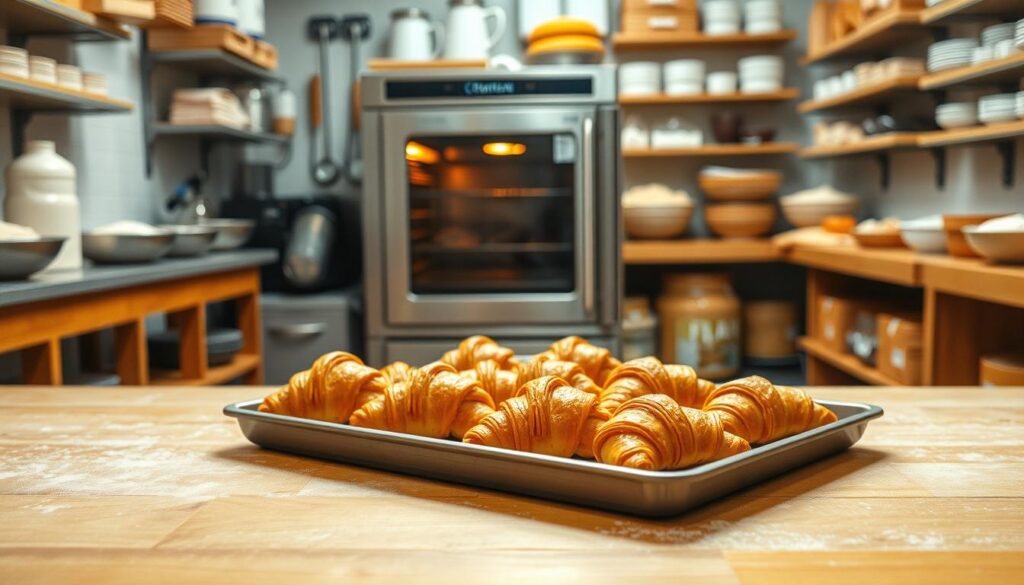
Mastering the art of baking croissants and brioches starts with the proofing process. This step is key to making your pastries light and airy. It’s all about creating the perfect environment for the dough to grow.
Proofing turns raw dough into a masterpiece. You need a warm, humid spot for this. Aim for a temperature of 75-80°F and moderate humidity. This will help your dough rise evenly.
- Check dough volume: Properly proofed pastries should double in size
- Watch for soft, puffy texture indicating ready dough
- Gently press dough – it should slowly spring back when proofed
When baking, precision is key. Preheat your oven to 375-400°F for a golden-brown finish. An egg wash adds that glossy look that pros love.
Professional bakers share these top tips:
- Use a clean, draft-free area for proofing
- Avoid over-proofing, which causes flat, dense pastries
- Rotate baking sheets for even browning
With practice and patience, your homemade pastries will become amazing. Each batch gets you closer to that bakery-quality taste.
Creative Filling and Flavor Variations for Croissants Brioches
Take your pastries to the next level by trying new fillings and flavors. French bakeries are full of ideas to make croissants and brioches into tasty masterpieces.
Exploring different flavors can lead to amazing discoveries. The right filling can turn a simple croissant into a memorable treat.
Sweet and Savory Options
Croissants and brioches are great for both sweet and savory fillings. Here are some tasty ideas:
- Sweet Fillings:
- Rich chocolate ganache
- Almond cream
- Fresh fruit compotes
- Vanilla pastry cream
- Savory Fillings:
- Aged cheese and herb blends
- Prosciutto and gruyère
- Smoked salmon with dill
- Caramelized onion and goat cheese
Traditional French Fillings
French bakeries focus on quality and detail. Classics like pain au chocolat and jambon-fromage croissants are loved for their flavors.
Modern Interpretations
Today’s pastry chefs are trying new things. They mix matcha cream with truffle spreads for exciting twists.
Don’t be afraid to try new flavor combinations. But remember, keep your pastries light and flaky. The goal is to be creative yet precise.
Troubleshooting Common Croissant Brioche Problems
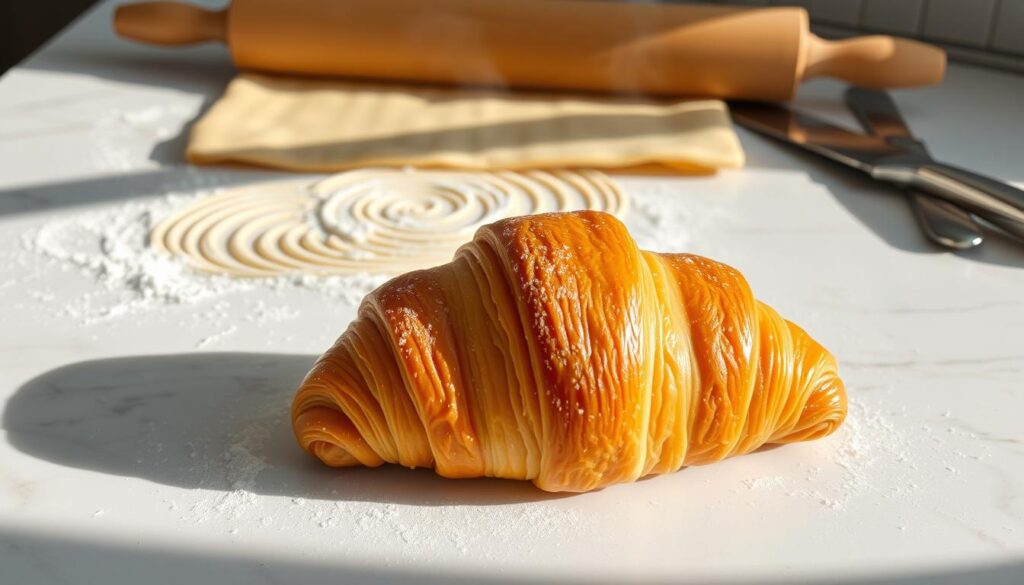
Mastering flaky pastry baking can be tough, even for pros. Knowing common issues helps make perfect croissants and brioches every time.
Butter leakage is a big problem for delicate pastries. It happens when butter is too warm or dough isn’t chilled enough between steps. Keep butter cool and chill the dough briefly during folding.
- Maintain butter temperature between 55-65°F
- Chill dough for 20-30 minutes between turns
- Use a digital kitchen thermometer for precision
Getting a light, airy texture needs careful baking. Dense pastries come from overworking dough or using dead yeast.
| Problem | Cause | Solution |
|---|---|---|
| Uneven Browning | Inconsistent oven temperature | Use an oven thermometer, rotate baking sheet midway |
| Dense Texture | Old or inactive yeast | Check yeast freshness, proof before using |
| Butter Leakage | Warm butter | Maintain cool, consistent butter temperature |
Things like humidity and altitude can mess with your pastry. Professional bakers suggest making small changes to fix these issues. Keep a baking journal to track your changes and improve your skills over time.
How to Store and Reheat Croissants Brioches
Keeping your homemade baked goods fresh is key. Croissants and brioches are special because they need careful handling. This helps keep their texture and taste amazing.
Here’s how to store your pastries right:
- Let them cool down completely before storing
- Use containers that keep air out to stop moisture and dryness
- Keep them away from sunlight and heat
For a short time, your pastries can stay fresh at room temperature for 1-2 days. Wrap them in parchment paper or use a bread box to keep them crisp.
Refrigeration can make your pastries last longer, but be careful. Cold can hurt the flaky texture of croissants and brioches. If you refrigerate, use a sealed container and eat them in 3-4 days.
Here’s how to reheat your pastries to make them fresh again:
- Heat your oven to 300°F (150°C)
- Wrap the pastries in foil
- Heat for 5-7 minutes until they’re warm and crispy
Pro tip: Don’t use the microwave to reheat. It can make your pastries soggy and ruin their flaky texture.
Freezing is great for keeping pastries fresh for a long time. Wrap each pastry in plastic wrap and put them in freezer bags. Frozen pastries can stay good for up to 2 months.
Conclusion: Final Tips for Croissants Brioches
Making authentic croissants and brioches is more than a skill—it’s an art. It’s rooted in French bakery traditions. Your journey through viennoiserie is filled with technique, patience, and passion.
Each fold of dough and every carefully shaped pastry brings you closer to mastering these French delicacies. It’s a journey worth taking.
Remember, perfecting croissants and brioches takes time and practice. It’s not just about following recipes. It’s about understanding the techniques that make simple ingredients into something special.
Your kitchen can become your own French bakery. Here, precision meets creativity. It’s a place where you can let your skills shine.
Be excited about learning and trying new things. Experiment with different fillings, shapes, and techniques. Your dedication will show in every flaky, golden bite.
The world of viennoiserie is full of possibilities. It’s waiting for you to explore and enjoy.
Your knowledge opens a door to a culinary adventure. It connects you with generations of French bakers. Keep practicing, stay curious, and enjoy every moment of your pastry-making journey.
FAQ
What is the difference between a croissant and a brioche?
Croissants have layers of butter and pastry, making them flaky and crisp. Brioche, on the other hand, is soft and cake-like due to its high butter and egg content. Both are French but differ in how they’re made and what they taste like.
How difficult is it to make croissants at home?
Making croissants is a bit tricky but doable with practice. It involves folding and resting the dough several times. With patience and the right steps, you can make croissants just like a bakery.
What type of butter works best for croissants?
Use European-style butter for croissants because it has more fat and less water. Plugrá or President are good choices. The butter should be cool but soft, like modeling clay, for the best layers.
Can I freeze croissants and brioches?
Yes, you can freeze both unbaked and baked pastries. For unbaked, freeze after shaping but before proofing. For baked, cool them down first. Thaw and reheat in the oven to get them crispy again.
Why do my croissants leak butter during baking?
Leaking butter happens when the dough is too warm or the butter isn’t mixed right. Make sure your butter is just right and keep the dough cold. Also, keep the folding and resting temperatures steady to avoid butter melting.
What’s the secret to getting a perfect golden-brown croissant?
For a golden-brown croissant, use an egg wash and bake at the right temperature. Beat the egg well and mix it with a bit of milk for the wash. Bake at 400°F (200°C) for even color.
Can I make vegan croissants or brioches?
Vegan croissants are possible but tricky. You’ll need to use plant-based butter and egg substitutes. But, it’s hard to get the exact taste and texture of dairy and eggs.
How long does it take to make croissants from scratch?
Making croissants takes 12-24 hours. This includes dough prep, lamination, resting, proofing, and baking. Most of this time is spent waiting for the dough to rest and chill.
Bake It. Love It. Tell Us About It.
There are no reviews yet. Be the first one to write one.